

By using this site, you agree to the Privacy Policy and Terms of Use.
Accept
MedNetMedNetMedNet
  • Home
  • News & Perspective
    News & PerspectiveShow More
    New Urine Test Shows Promise for Early Detection of Bladder Cancer
    New Urine Test Shows Promise for Early Detection of Bladder Cancer
    By European Medical Journal
    Digital Health Sector Slowed Down in 2023
    Digital Health Sector Slowed Down in 2023
    By Medscape
    Historic milestone as child mortality hits record low of 4.9 million in 2022
    Historic milestone as child mortality hits record low of 4.9 million in 2022
    By United Nations News
    Gene Discovery May Lead to Better Alzheimer’s Treatments
    Gene Discovery May Lead to Better Alzheimer’s Treatments
    By MedNet
    Low Birthweight in Males Associated with Type 2 Diabetes
    Low Birthweight in Males Associated with Type 2 Diabetes
    By European Medical Journal
  • Specialties
    • Cardiology
    • Endocrinology
    • Neurology
    • Pediatrics
    • Urology
  • Research & Review
    Research & Review
    Medical research encompasses a wide array of research, extending from “basic research to clinical research, which involves studies of people who may be subjects in…
    Show More
    Top News
    Decreasing the Risk of Heart Failure in a Changing Post–Myocardial Infarction Environment
    Decreasing the Risk of Heart Failure in a Changing Post–Myocardial Infarction Environment
    April 10, 2024
    CAR T-Cell Therapy for Glioblastoma
    CAR T-Cell Therapy for Glioblastoma
    April 18, 2024
    Smoking identified as key factor in accelerated cognitive decline
    Smoking identified as key factor in accelerated cognitive decline
    July 12, 2024
    Latest News
    Smoking identified as key factor in accelerated cognitive decline
    July 12, 2024
    CAR T-Cell Therapy for Glioblastoma
    April 18, 2024
    Decreasing the Risk of Heart Failure in a Changing Post–Myocardial Infarction Environment
    April 10, 2024
  • Lifestyle
    LifestyleShow More
    Taking the Stairs Could Help You Live Longer
    Taking the Stairs Could Help You Live Longer
    By Everyday Health
    5 Potential Health Benefits of Acupressure Therapy
    5 Potential Health Benefits of Acupressure Therapy
    By Everyday Health
  • Nutrition & Diet
    Nutrition & Diet
    Eating a well-balanced diet means eating a variety of foods from each of the 5 food groups daily, in the recommended amounts.
    Show More
    Top News
    Obesity and a high fat diet may accelerate brain aging, lead to cognitive decline
    Obesity and a high fat diet may accelerate brain aging, lead to cognitive decline
    April 10, 2024
    Eating ultra-processed foods may raise risk of death by 10%
    Eating ultra-processed foods may raise risk of death by 10%
    July 12, 2024
    Latest News
    Eating ultra-processed foods may raise risk of death by 10%
    July 12, 2024
    Obesity and a high fat diet may accelerate brain aging, lead to cognitive decline
    April 10, 2024
  • Blog
Notification Show More
Font ResizerAa
MedNetMedNet
Font ResizerAa
  • News & Perspective
  • Specialties
  • Research & Review
  • Lifestyle
  • Nutrition & Diet
  • Categories
    • News & Perspective
    • Research & Review
    • Nutrition & Diet
    • Lifestyle
  • Health Specialties
    • Cardiology
    • Endocrinology
    • Neurology
    • Pediatrics
    • Urology
  • More MedNet
    • Blog Index
    • Sitemap
Follow US
MedNet > Specialties > Neurology > Gene Discovery May Lead to Better Alzheimer’s Treatments
NeurologyNews & Perspective

Gene Discovery May Lead to Better Alzheimer’s Treatments

The discovery of a gene variant that rids the brain of toxic plaques linked to Alzheimer's might lead to new treatments for the disease, researchers report.

MedNet
Last updated: April 13, 2024 1:13 pm
By MedNet
Share
5 Min Read
Gene Discovery May Lead to Better Alzheimer’s Treatments
SHARE

The variant arises naturally in people who don’t seem to get Alzheimer’s disease despite having another gene, called APOEe4, that strongly promotes the illness.

Contents
Breaking the blood-brain barrierEarlier clearance, better treatment?

“These resilient people can tell us a lot about the disease and what genetic and non-genetic factors might provide protection,” explained study co-lead author Badri Vardarajan, an assistant professor of neurological science at Columbia University in New York City.

“We hypothesized that these resilient people may have genetic variants that protect them from APOEe4,” Vardarajan added in a university news release.

The researchers believe the newly discovered gene variant may reduce the risk for Alzheimer’s by more than 70% in folks lucky enough to carry it.

Breaking the blood-brain barrier

In their research, Vardarajan and colleagues conducted genomic screening on hundreds of individuals who carried the APOEe4 gene variant, which greatly raises the risk for Alzheimer’s, but who had gone into old age without developing the disease.
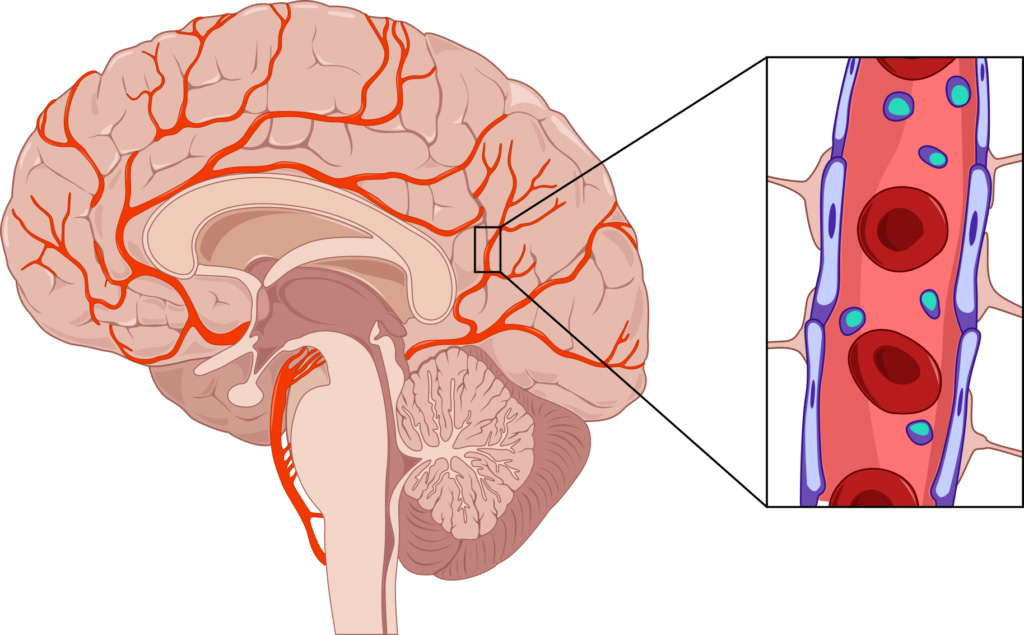
The found a common variant shared by many of these people. It occurred in a gene charged with making fibronectin, a component used to make the “blood-brain barrier.”

That’s the lining that surrounds the brain and helps police which substances can get in and out.

People who develop Alzheimer’s tend to produce much higher levels of fibronectin, the Columbia team noted. In contrast, folks with the newly discovered gene variant had only small amounts of fibronectin within their blood-brain barrier.

That means that certain toxins — including amyloid plaques that are a hallmark of Alzheimer’s — can more readily escape the brain in folks who carry the newly discovered gene variant.

“Alzheimer’s disease may get started with amyloid deposits in the brain, but the disease manifestations are the result of changes that happen after the deposits appear,” noted study co-leader Caghan Kizil, an associate professor of neurological science at Columbia’s Vagelos College of Physicians and Surgeons.

Read More

Smoking identified as key factor in accelerated cognitive decline

Smoking identified as key factor in accelerated cognitive decline

Low Birthweight in Males Associated with Type 2 Diabetes
Historic milestone as child mortality hits record low of 4.9 million in 2022
New Urine Test Shows Promise for Early Detection of Bladder Cancer

Excess fibronectin could encourage all that toxic amyloid to stay put.

“It’s a classic case of too much of a good thing,” Kizil said. “It made us think that excess fibronectin could be preventing the clearance of amyloid deposits from the brain.” 

People with the new gene variant may have a kind of “release valve” to let amyloid drain away in blood.

“Our findings suggest that some of these changes occur in the brain’s vasculature and that we may be able to develop new types of therapies that mimic the gene’s protective effect to prevent or treat the disease,” said Kizil.

Earlier clearance, better treatment?

Certain newly approved drugs, such as Leqembi, create an immune system response that can help remove some amyloid from the brain. However, the effect is weak and may come too late, said study co-leader Dr. Richard Mayeux, chair of neurology at Columbia.

“We may need to start clearing amyloid much earlier and we think that can be done through the bloodstream”. “That’s why we are excited about the discovery of this variant in fibronectin, which may be a good target for drug development.” 

Mayeux said.

The initial findings from the Columbia cohort of Alzheimer’s-resistant patients have already been replicated in a group of similar patients in Europe. That study was led by researchers at Stanford and Washington universities.

“They found the same fibronectin variant, which confirmed our finding and gave us even more confidence in our result,”

Vardarajan noted.

The total number of patients studied topped 11,000, and that statistical power allowed the researchers to calculate that the gene variant cut a person’s odds for Alzheimer’s by 71%.

Even if Alzheimer’s did develop, they estimate that the fibronectin gene variant slowed disease onset by an average of four years.

The Columbia team published its findings April 10 in the journal Acta Neuropathologica.

About 1% of all APOEe4 carriers in the United States are thought to also carry the fibronectin gene variant, the study authors noted.

“There’s a significant difference in fibronectin levels in the blood-brain barrier between cognitively healthy individuals and those with Alzheimer’s disease, independent of their APOEe4 status,” Kizil said. “Anything that reduces excess fibronectin should provide some protection, and a drug that does this could be a significant step forward in the fight against this debilitating condition.” 

HealthDay
TAGGED:AlzheimmerCognitive DeclineNeurology
SOURCES:Columbia University, News Release, April 10, 2024medicinenet.com
VIA:Ernie Mundell, HealthDay Reporter
Share This Article
Facebook Copy Link Print
MedNet White Logo
ByMedNet
Follow:
The articles on MedNet are written by experienced healthcare professionals and medical experts, ensuring that they are accurate, reliable, and up-to-date. Whether you are a medical student, a healthcare professional, or simply someone who is interested in learning more about health and medicine, MedNet provides the information you need in a clear and concise manner.

Top Ten Quiz: What do you know about cancer?

How much do you know about cancer, prevalence and risk factors? Test your knowledge with this quick quiz.
Get Started
Smoking identified as key factor in accelerated cognitive decline

The study, published in Nature Communications, analyzed data from 32,000 adults aged 50…

Low Birthweight in Males Associated with Type 2 Diabetes

LOW birthweight may be associated with increased risk for Type 2 diabetes…

Historic milestone as child mortality hits record low of 4.9 million in 2022

Figures released by the UN Interagency Group for Child Mortality Estimation (UN IGME)…

Your one-stop resource for medical news and education.

Your one-stop resource for medical news and education.
Sign Up for Free

You Might Also Like

Digital Health Sector Slowed Down in 2023
News & Perspective

Digital Health Sector Slowed Down in 2023

By Medscape
CAR T-Cell Therapy for Glioblastoma
NeurologyResearch & Review

CAR T-Cell Therapy for Glioblastoma

By The New England Journal of Medicine
Obesity and a high fat diet may accelerate brain aging, lead to cognitive decline
NeurologyNutrition & Diet

Obesity and a high fat diet may accelerate brain aging, lead to cognitive decline

By MedNet
Logo Footer
Facebook-f X-twitter Instagram
Company
  • Privacy Policy
  • Editorial Policy
  • Terms & Conditions
  • Contact US
  • Feedback
  • Advertisement
More Info
  • Newsletter
  • Lifestyle
  • Specialties
  • Research & Review
  • News & Perspective
  • Nutrition & Diet
  • Editor’s Picks

Sign Up For Free

Subscribe to our newsletter and don't miss out on our programs, webinars and trainings.

Join Community

© 2024 MedNet

Welcome Back!

Sign in to your account

Username or Email Address
Password

Lost your password?